Rachel
2/3/2026 9:19:28 AM
4 mins read
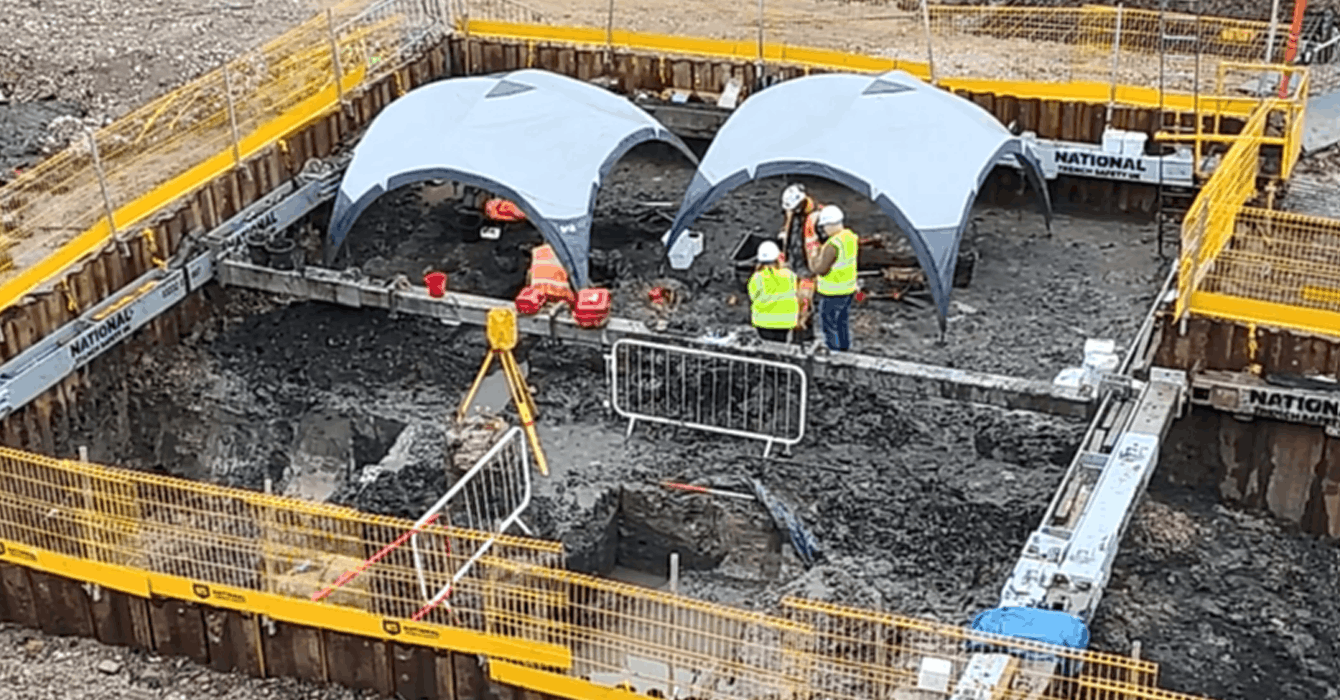
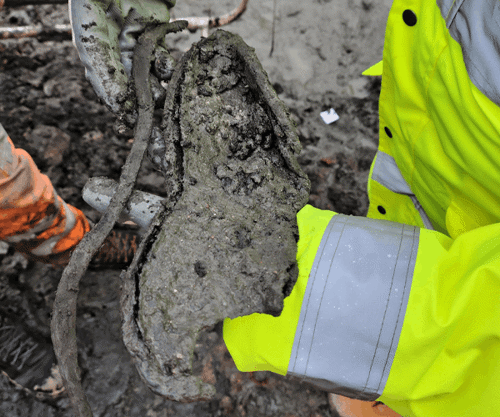
A window into the Grimsby of yesteryear has been uncovered – from scraps of leather shoes to fish bones – building a unique picture of how the town built itself up.
The remnants of medieval Grimsby have been discovered by a team from York Archaeology at Grimsby’s Freshney Place redevelopment, near the historical Flottergate area.
The leather was uncovered, along with pottery and fish bones, ahead of works to build a large attenuation tank, part of flood prevention measures being installed at the site. At about 2-3 metres below sea level, the site is a unique opportunity to find out what life was like for residents over 500 years ago.
These finds give some insight into the area which experts believe was once a leather workshop right in the heart of the town. A once bustling market place, the area hasn’t changed all that much, but simply update and altered itself according to the world around it.
The dig, which started last October and concluded in early February 2026, was recommended by the local planning authority and council heritage officer to check if anything important survived from Grimsby’s past before building started.
BWB Consulting have coordinated the works as part of the Freshney Place redevelopment. Phil Moore, Principal Archaeology consultant from the company, said: “The wet nature of this site means that there was always the potential for finding preserved organic material – wood or leather, for example.
“You may think that damp conditions would cause these to rot away, but the soil can actually contain very little oxygen, which stops the microorganisms that prompt decomposition from surviving here.”
“This is really adding to the history of our town,” added Louise Jennings, the Council’s Heritage Officer. “On first inspection, it looks like this might have been a leather working area – a bit like some of the areas we’ve found in previous digs in the past in other areas of the town.
“You could imagine that people are making leather aprons or shoes on the site, for example. Being so close to the sea, it’s understandable that people would have fish and shellfish as a big part of their diet, so the appearance of oyster shells and fish bones isn’t surprising.
“It may be that this area was home to a leather working workshop, and you can imagine people working in the workshop, having fish for their lunch.”
Cllr Hayden Dawkins, Cabinet member for tourism and heritage, said: “This is wonderful to see – knowing that a whole world is right under our feet is truly fascinating and being able to find out so much about it is a privilege for us as a Council, but also for the borough as a whole.
“I’d love to see these items come back to the town and put on show as part of a future exhibition so people can see them, and possibly handle them, too.
“It’s so important that we understand our past and have the ability to teach younger generations about how the Grimsby of today came about.”
About the site
The first written recording of Great Grimsby was in 866AD, and by the time of the Domesday Book in 1086, there was a population of around 33 families on the banks of the River Haven.
On 11 March 1201, Grimsby’s most historic document, the town’s Charter, ordained that ‘the good men of Grimsby should be governed by a mayor’. From then on Grimsby had its own court and its own local government and by 1218 Grimsby had a mayor.
During the 12th century the town developed into a fishing and trading port. Whilst fishing was its lifeblood, ships also brought timber from Norway and wine from Spain and France. Wool was exported from Grimsby and coal was brought along the coast from Newcastle. At one point the town ranked 12th in importance to the Crown in terms of tax revenue.
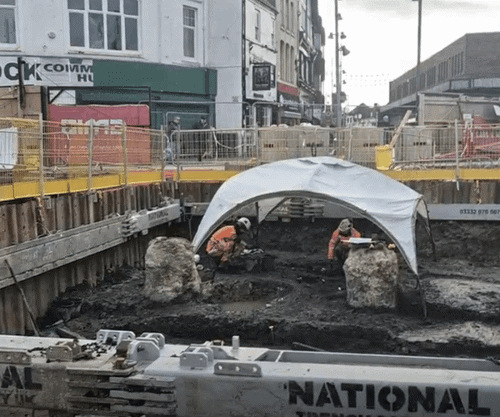
The excavation, next to the historic street “Flottergate”, Is about 2-3 metres lower than the modern ground level and is thought to be the probable ground level of Grimsby in medieval times (approximately 450AD to 1600AD).
Flottergate was historically a bustling area in the historic centre of the town. The adjacent Bullring area formed part of a thriving livestock market as well as being close the religious and spiritual centre of the town between the Grimsby Minster and the Augustinian Friary.
Next steps
The items found have been removed to York Archaeology’s conservation lab for cleaning and further examination, with a view to them returning to the town and being put on display in the future.